

Brelle: The Energy Platform for the World's Most Demanding Machines
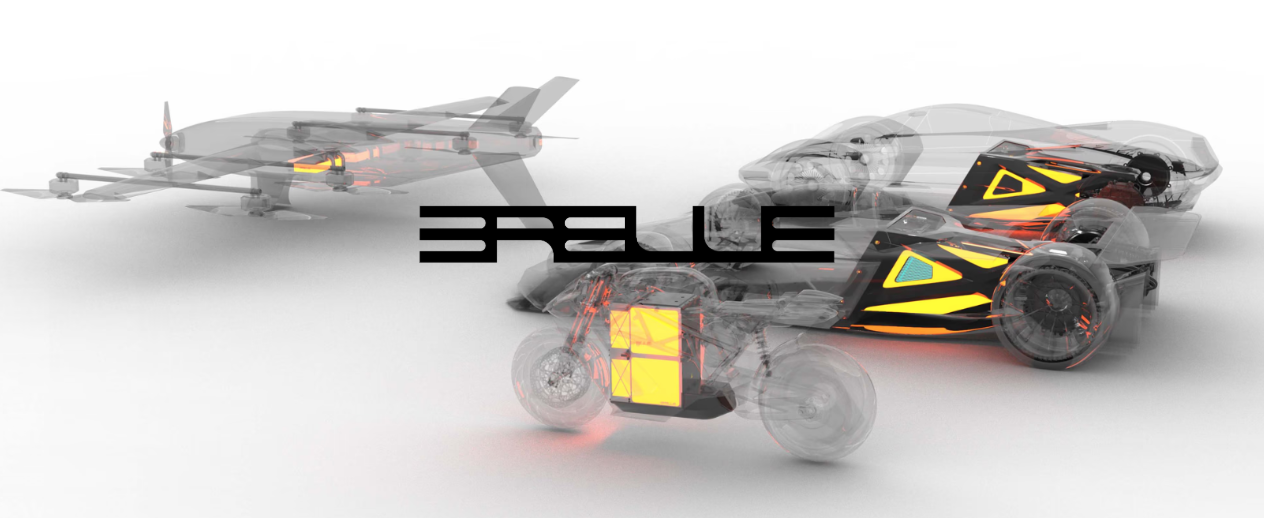
Brelle is a Los Angeles hard tech company building integrated battery systems and embedded software for automotive, motorcycles, and aerial and defense platforms. Founder Martin Hermez spent seven years at Rivian leading energy systems and software teams. I'm proud that Refactor Capital is backing Brelle, alongside Timescale, with a board that includes Charles Sanderson, former Chief Engineer at Rivian and CTO of McLaren Automotive.
A founder who has seen the whole arc
Martin was born in Iraq, into a Chaldean family. After the 2003 Iraq War, his family fled the warzones of Baghdad and resettled in Detroit. He learned English there, adapted to a new country, and fell for technology, cars, and software.
That path led him to Rivian, where he was one of the earliest engineers. Over seven years he led energy systems and software teams through the full arc, from prototype to mass production of Rivian's launch products. Very few people get to live through that, and fewer still come out the other side knowing exactly what they would do differently.
Brelle is what Martin would do differently. The scale-up lessons are baked in from day one instead of bolted on at Series C.
One platform, many machines
Most battery companies design a pack for a product. Brelle designs a flexible battery architecture and then deploys it across segments at the same time. Today that means three starting points.
- Automotive. High-density battery systems for next-generation performance vehicles, built for strong power-to-weight efficiency and fast charging.
- Motorcycles. A lightweight, compact energy architecture for machines where agility matters, tuned for power density and thermal resilience under sustained load.
- Air and defense. Battery platforms for high-output, weight-sensitive aerial applications, including drones and advanced air mobility, where reliability is the whole job.
These machines look different, but they ask the same thing of their energy system: a lot of power, very little weight, and no surprises. One architecture that serves all of them is a stronger bet than three separate pack programs.
Hardware and software built as one system
The part of Brelle I find most interesting is that the battery and the software are designed together. Brelle's flexible battery hardware is tightly coupled with Brelle OS, an embedded software platform, plus the tooling around it. The result is a system that is adaptive, extensible, and performant, and one that is low friction for the customers who build on it.
This is the deep tech version of owning the stack. When the team controls the cells, the pack, the firmware, and the tools, they can tune the whole system instead of negotiating between vendors. Brelle also builds safety in as layers, from materials through software, rather than treating it as a final test.
US-first supply chain, designed for dark-factory automation
Brelle is planning its manufacturing strategy before it needs it. The supply chain is US-first, and the product is designed from the start for dark-factory automation, meaning factories that run with minimal human intervention. The goal is globally competitive scale economics from an American supply chain.
That is a hard problem and an important one for frontier tech and critical industries. Batteries are the energy backbone of electrified vehicles, drones, and defense systems, and the country needs more than one credible domestic answer. Designing for automation up front is how a seed-stage company gets a shot at competing on cost with the best manufacturers in the world. Martin has watched what happens when manufacturing is an afterthought, and he is not repeating it.
A team from the places that set the bar
Brelle's team includes alumni from Rivian, Tesla, Koenigsegg, Apple, and McLaren, among others. That mix of automotive, hypercar, consumer hardware, and motorsport experience shows in how the company talks about performance. The company tests at the HiMaC facilities at UC Irvine, and the work is hands-on, in the lab and on the line.
Charles Sanderson's involvement on the board matters to me as well. He has taken vehicles from engineering concept to customer hands at both Rivian and McLaren, and he knows what it takes to ship hardware at that level.
Why I backed Brelle
At Refactor, I look for founders who have earned the right to take on a hard problem. Martin has. He learned his craft at one of the few American companies to take a new vehicle platform from prototype to mass production, and he left with a clear view of where the energy system becomes the bottleneck.
I like the platform approach because it respects how hard tech actually works. You do not get unlimited shots, so you build one architecture that can serve several markets. I like the integrated stack because the best battery in the world is only useful if the software around it is excellent. And I like the manufacturing plan because it was written by someone who has watched a factory ramp.
If you are building a machine that asks a lot of its battery, whether that is a vehicle, a motorcycle, or an aircraft, Brelle would like to hear from you. You can learn more and start a project at brelle.tech.
Congratulations to Martin and the whole Brelle team. A long way from Baghdad to Detroit to Los Angeles, and they are just getting started.
#BetterCallZal


